Zetor Tractor Service Manuals: Official Factory Workshop Manuals & Data
To keep your Zetor tractor performing at its peak, general maintenance isn’t enough—you need the exact technical specifications used by the engineers who built it. Whether you are operating a classic Major or Proxima, or a high-performance Forterra or Crystal, these machines require specific protocols to maintain their modular reliability. Our digital library provides instant access to Genuine Factory-Issue Documentation, ensuring every service task meets the original engineering standards set by the Zetor works in Brno, Czech Republic.
Official Factory Source Material: Verified Technical Data
In professional farming, your equipment's uptime depends entirely on the quality of your service data. Our collection consists exclusively of original, unedited factory literature. These are the same digital workshop manuals and parts catalogs used by authorized Zetor dealerships and master technicians worldwide.
By using official factory sources instead of generic aftermarket guides, you eliminate the guesswork. You get the exact torque sequences, hydraulic pressure settings, and wiring schematics specific to your VIN and model year. Using verified manufacturer intelligence is the only way to ensure your tractor remains as reliable as the day it left the factory.
Technical Specifications for Every Zetor Generation
Our archive covers the full Zetor lineage, from vintage legacy models to modern Tier 4 machinery, providing the precision needed for professional-grade maintenance:
- Engine & Drivetrain Specs: Complete data for Zetor diesel engines, including fuel injection timing, valve clearances, and internal tolerances for both naturally aspirated and turbocharged units.
- Transmission & Hydraulics: Detailed schematics for mechanical and semi-automatic power-shift transmissions, including calibration data for Bosch HitchTronic systems and auxiliary circuits.
- Electrical Systems & Diagnostics: Comprehensive wiring layouts and diagnostic trees for troubleshooting charging systems, lighting, and Electronic Control Modules (ECM).
- Chassis & Braking: Factory-certified specs for front-axle alignment, pneumatic/hydraulic brake overhauls, and PTO engagement metrics.
Built for the Workshop and the Field
These manuals are optimized for immediate use in high-pressure environments, allowing you to get your equipment back to work faster.
- Instant Digital Delivery: Access your technical files immediately after purchase to minimize downtime.
- Mobile & Tablet Optimized: High-resolution PDFs that stay sharp on any device, whether you are in the shop or out in the field.
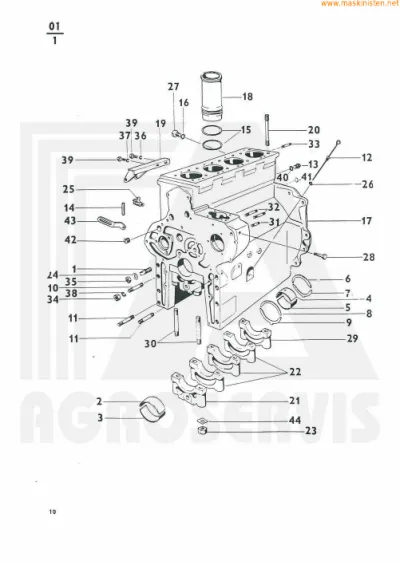
- Searchable Index: Quickly find specific Diagnostic Trouble Codes (DTC), torque values, or exploded assembly diagrams with keyword searching.
- Print-Ready Quality: All technical tables and intricate circuit diagrams are formatted for high-quality printing, ensuring legibility even in rugged conditions.
Essential Safety Information for Zetor Maintenance
The official Zetor service documentation provided here is intended for use by qualified mechanics and experienced operators. Working on heavy agricultural machinery involves significant risks, particularly with high-pressure hydraulics and spring-loaded assemblies. By purchasing these manuals, you acknowledge that this data is provided for technical reference. Always prioritize safety: use Zetor-specified tools, wear appropriate protective equipment, and consult an authorized dealer for procedures involving structural integrity, engine timing, or pressurized systems to prevent injury or equipment damage.
Select your Zetor model, series, and production year from the inventory below to access the definitive factory source for your tractor.
Zetor Manuals (3 total results)
1982 Zetor 8011, 8045, 12011, 12045 Tractor Workshop Manual (P/N 735 342 310 153)
Zetor 3320, 3340, 4320, 4340, 5201, 5320, 6340 Factory Workshop Manual