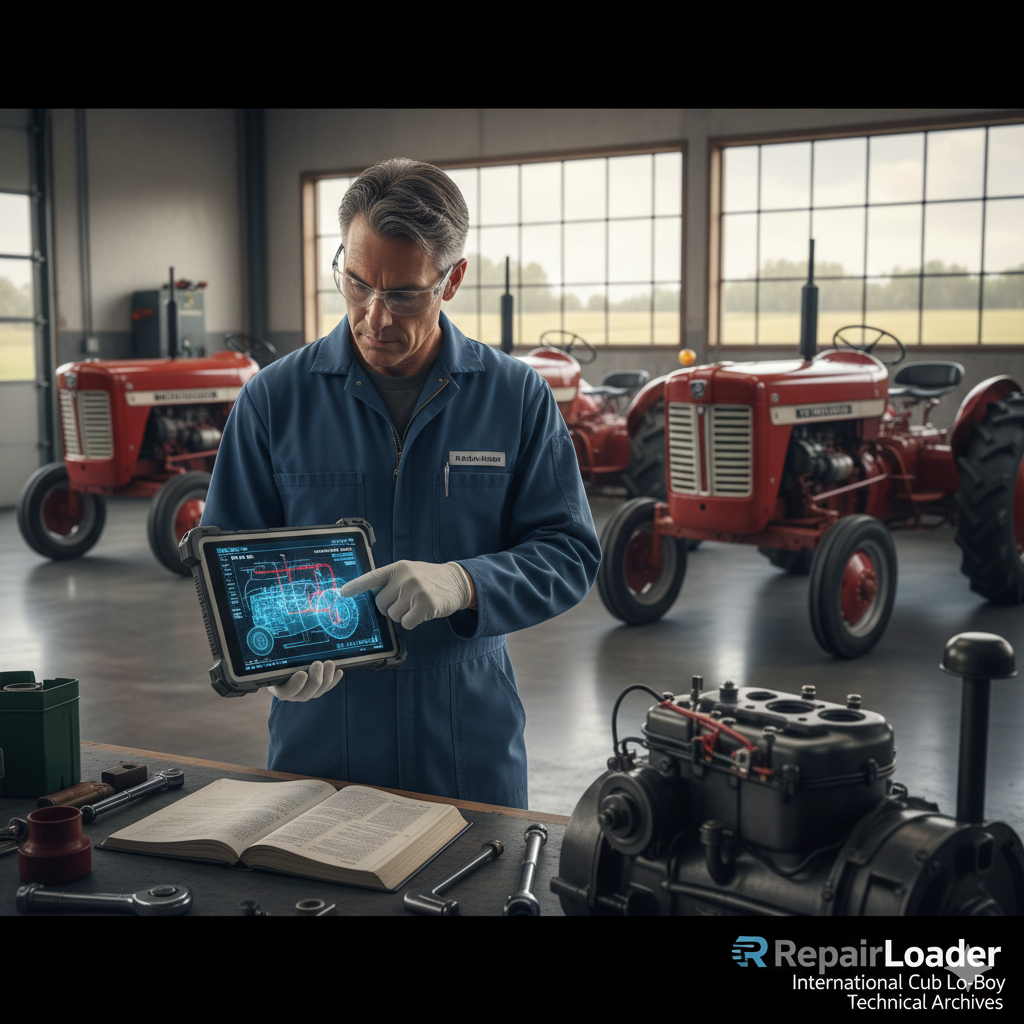
The International Harvester Cub Lo-Boy 154, 184, and 185 series represent a unique chapter in agricultural engineering, blending the versatility of a compact utility tractor with a specialized low-center-of-gravity design. To maintain the precision of these machines, especially in high-duty mowing or light landscaping environments, technicians must adhere to the rigorous mechanical standards established by the original factory specifications. For those responsible for the preservation and restoration of these classic powerhouses, the International Cub 154 184 185 Lo-Boy Service Manual serves as the primary technical authority for ensuring long-term operational integrity.
Engine Dynamics and Cylinder Head Maintenance
At the core of the Lo-Boy series is a power unit designed for consistent torque delivery. Maintaining the thermal efficiency of this engine requires a surgical approach to the cylinder head and valve train.
- Valve Lash Precision: Proper valve lash adjustment is critical for preventing power loss and exhaust valve burnout. The manual specifies exact procedures for reconditioning valves and fitting seats to ensure optimal compression cycles.
- Piston and Rod Geometry: Achieving the correct piston fit in the bore and ensuring precise bearing fitting procedures (Section 1-32) are the benchmarks for a successful engine overhaul. This includes strictly following the crankcase cylinder re-boring and honing protocols to restore factory displacement standards.
Powertrain and the Electric IPTO Clutch System
One of the more advanced features for its era is the electric Independent Power Take-Off (IPTO) clutch system found in the 184 and 185 models. Unlike traditional mechanical linkages, this system utilizes specific voltage and resistance parameters to engage the mower deck or implements.
- Electrical Diagnostics: Technicians must verify the IPTO clutch’s current draw (typically 2.60 to 4.61 Amps) to prevent premature coil failure.
- Safety Circuit Calibration: The safety starting circuit (Section 10-7) involves a complex interaction between the clutch pedal safety start switch and the resistor unit. Correct adjustment—ensuring an 11 mm (7/16 inch) distance between the clutch pedal bracket and the switch bracket—is mandatory for safe operational sequencing.
Strategic Maintenance for Classic International Fleets
The structural integrity of the International Lo-Boy series is maintained by following a data-driven service culture. From the exact torque settings for the final drives to the specific timing of the distributor, every maintenance action should be grounded in the manufacturer’s master data.
For collectors and professional operators looking to secure their entire fleet’s operational readiness, our comprehensive International Technical Documentation Library provides verified factory service data for a wide range of heritage and modern machinery.
Conclusion: Engineering Longevity through Verified Standards
The International Cub Lo-Boy series remains a highly sought-after utility asset due to its robust chassis and adaptable power delivery. Preserving the engineering excellence of these tractors requires moving beyond generic repair methods and utilizing the specific Technical Workshop Archives designed for these models. By strictly adhering to the original re-boring tolerances, electrical resistance values, and kinematic adjustments, you ensure that your International Harvester equipment continues to meet the rigorous performance standards for which it was originally engineered.