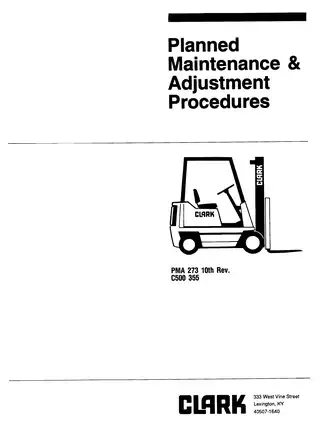
In industrial logistics, the structural integrity of upright components is the decisive factor for operational safety and longevity. The Clark C500 series defines precise maintenance standards that go far beyond simple routine checks. For lead mechanics and asset managers, strict adherence to factory engineering specifications is essential to maintain the mechanical sovereignty of their fleet. Accessing the official Clark C500 355 Service Manual ensures that every inspection—from chain elongation to hydraulic pressure testing—aligns with the original engineering benchmarks.
Forensic Maintenance: The Kinematics of Lift Chains
Maintaining Clark forklifts requires a deep understanding of material fatigue in load chains. According to technical guidelines (PMA 273), lift chains must undergo a forensic examination during every preventive maintenance cycle (50–250 operating hours).
- Wear Limits: Chain strands must be replaced immediately if elongation of 3% compared to the new condition is detected. This measurement must be taken on the portion of the chain that flexes over the sheaves.
- Structural Integrity: The inspection includes the identification of cracked plates, turned pins, and stiff joints caused by corrosion or lack of lubrication.
- Lubrication Protocol: To prevent frictional heat and premature wear, the use of Clark Chain and Cable Lube (#886399) is mandated to ensure full penetration of the chain links.
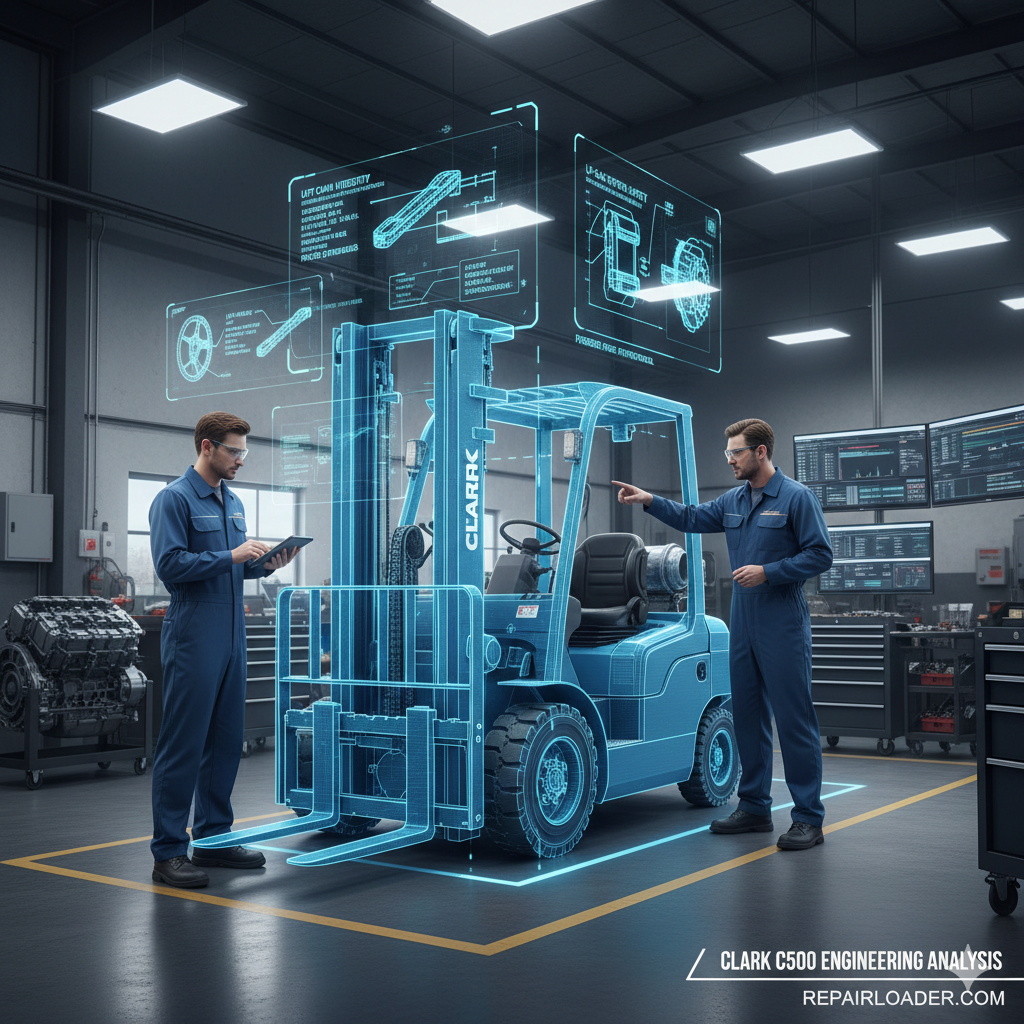
Systematic Fleet Management for Forklift Trucks
Extending the life cycle of Forklifts is based on a maintenance culture that rejects generic shortcuts. A critical safety aspect is the “Before Leaving The Truck” protocol, which mandates fully lowering the load-engaging means, putting directional controls in neutral, and applying the parking brake.
Before performing work on the fuel system (particularly on LP-Gas models), the engine must run until the system is pressure-free and the engine stops on its own. Such technical safety requirements are the foundation for accident-free operation in high-performance environments.
Conclusion: Technical Expertise as a Safety Anchor
The return on investment for a Clark C500 is protected by the quality of its technical care. By utilizing verified factory data, technicians eliminate the risk of miscalibration and secure operational uptime. True performance optimization is achieved only when the original technical standards are treated as the absolute law of the workshop.
v8.1 Bundle-Entropy-Omega+
- Primary Search Term: Clark C500 355 Service Manual
- Technical Tags: Lift Chain Maintenance, Chain Elongation Limits, LP-Gas Fuel System Safety, Hydrostatic Integrity, PMA 273 Standards, Sheave Bearing Inspection
- Authority Tags: Factory Service Data, Technical Workshop Archive, Clark Engineering Standards, Fleet Safety Protocols
- System Tags: #ClarkForklift #C500Series #IndustrialMaintenance #LiftChainSafety #WorkshopManual
v7.0 Archive-Entropy-Prime
- Vault: Clark Industrial Truck Division Repository [2026]
- Repository: Planned Maintenance & Adjustment Procedures
- Library: C500 Master Technical Archive