Scania Industrial & Marine Engine Service Manuals – Official OEM Documentation
Keep your heavy-duty equipment running and cut down on idle time with our library of Scania engine service manuals. We sourced this collection specifically for marine engineers, industrial technicians, and skilled mechanics who need accurate, factory-level specs for Scania’s diesel engines—including the 9-liter (D9), 11-series, 12-liter (D12), and 16-liter (D16) V8 families.
Verified Accuracy: Direct Factory Manuals
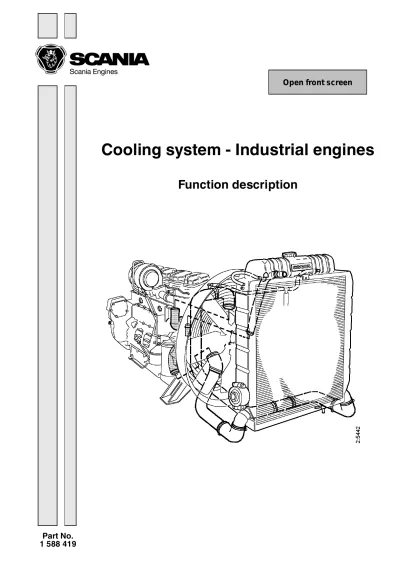
In marine and industrial environments, you can't rely on guesswork. Our Scania documentation is built on original, high-resolution factory workshop manuals. Unlike generic aftermarket books, these direct-from-the-manufacturer PDFs provide the exact engineering tolerances, fuel injection timing maps, and cooling system schematics laid out by Scania AB. Using verified OEM data ensures you maintain the structural integrity and operational safety of your equipment, while staying compliant with strict emission standards like IMO Tier II/III and EPA Tier 4.
What’s Inside the Manuals
These manuals break down Scania’s modular engine architecture, giving you the exact data required for professional maintenance and full overhauls. Topics covered include:
- Fuel & Injection: Specs for Unit Injectors (PDE) and Extra High-Pressure Injection (XPI), including pressure testing and bleeding procedures.
- Marine Systems: Routing and specs for keel cooling, heat exchangers, raw water pumps, and PTO interfaces.
- Electronics & Diagnostics: Complete wiring diagrams and EMS (Engine Management System) pinouts to help isolate fault codes quickly.
- Mechanical Specs: Factory torque specs and tightening sequences for cylinder heads, main bearings, and rods, plus exact wear limits.
- Air Management: Data for Variable Geometry Turbochargers (VGT) and charge air cooling circuits.
Instant Digital Access
Waiting for a paperback manual isn't an option when you're out on the water or holding up plant operations. All our Scania manuals are delivered instantly as searchable PDFs. You get critical troubleshooting steps, torque specs, and parts diagrams on your phone, tablet, or laptop exactly when you need them.
Important Safety Notice
Servicing heavy-duty marine and industrial diesel engines requires specific training, specialized tools, and strict situational awareness. Working with components like XPI high-pressure fuel lines or hoisting heavy engine blocks comes with serious physical risks. The OEM documents provided here are intended strictly for professional mechanics, certified marine engineers, and experienced technicians. RepairLoader supplies these factory reference materials for informational purposes only. You are fully responsible for following safe workshop practices, adhering to environmental regulations, and wearing the proper PPE. If you do not have the required training or Scania-specific diagnostic tools for a job, stop working and contact an authorized service center.
Scania Manuals (2 total results)
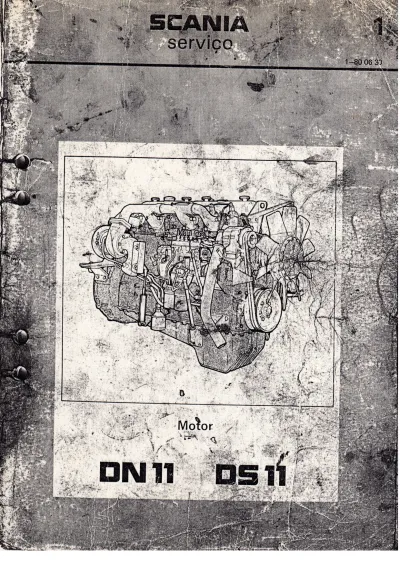
Scania DS11 / DN11 Diesel Engine Factory Service Manual (P/N 1-80 06 30 SP, 1980)