Not every manual search starts with a brand. In many cases, it starts with the machine type you have in front of you — and that is exactly where buyers either save time or lose it. A machine can be sold under a familiar brand name and still end up in the wrong search path if you begin with the wrong category term. This hub is built for that problem.
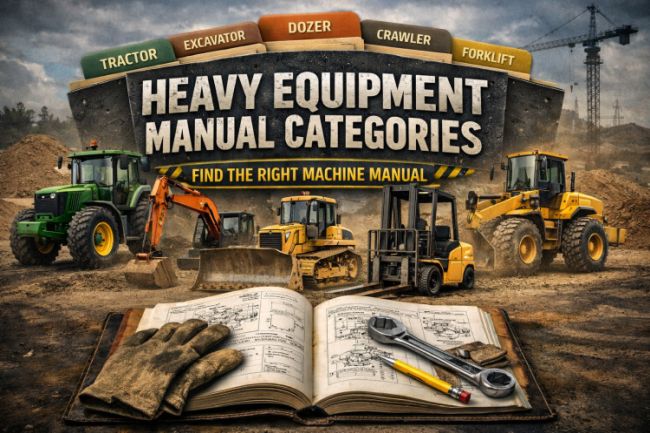
If you are looking at a machine used in agricultural, estate, compact utility, or general pulling work, the most logical entry point is the tractor manual section. That path makes the most sense when tractor series names, year overlap, and equipment family distinctions matter more than any one attachment installed on the machine. It is often the right place to start when the machine identity is clear, but the exact manual match still depends on model code, revision, or production range.
Machines built for digging belong in a different search flow entirely. The excavator manual category is the stronger route when the machine is defined by boom, house, undercarriage, and hydraulic platform rather than by a broader construction label. That matters because excavator naming can look deceptively simple until you compare size class, generation, or market variation. If your first instinct is to search by compact class, the mini excavator page gives you that narrower entry phrase directly, which can be useful when you are starting from the way the machine is commonly described on site rather than from the exact badge.
Dozer buyers usually run into a language issue before anything else. Some search for the full term, some use the short form, and both habits can lead to different browsing behavior. The bulldozer manual page is the natural fit if that is the wording you expect to see in product categories, while the dozer manual section is just as relevant when your search language is shorter, more field-driven, and based on everyday equipment shorthand. Using both terms intelligently is often better than assuming one naming style will cover every listing you need to evaluate.
There are also machine types that buyers misclassify because they focus on function instead of platform identity. A backhoe loader is one of the best examples. It should not be treated as just another loader search, which is why the backhoe loader category deserves its own place in the path. The same is true for compact loader equipment built around skid-steer configuration. The skid steer loader page is where that search becomes more precise, especially when general loader terms are too broad to separate one equipment family from another.
Track-based naming introduces a different kind of confusion. Some machines are searched by what they do, while others are searched by how they are built. That is where the crawler manual section becomes useful. It works as a better starting point when “crawler” is the actual language tied to the machine identity, whether in model naming, sales terminology, or the way owners and technicians refer to the platform. This category can help catch machines that are easy to miss when a buyer goes straight into a narrower task-based label.
Road-construction and grading equipment also benefit from a dedicated entry route. The motor grader category is the cleaner destination when the machine is part of a grader lineup and needs to be separated from broader construction searches that do not reflect the actual equipment class. For loader-based construction equipment, the wheel loader page is the more appropriate path when the machine is front-end loader based and built around that machine architecture rather than around a compact loader or backhoe format. And when the equipment is centered on lifting, handling, and industrial movement rather than earthmoving, the forklift manual category is the straightforward place to begin.
What matters on a hub page like this is not just giving you links. It is helping you choose the right first click. Buyers waste time when they treat every machine as if it belongs in one giant construction-equipment bucket. The better approach is to search by the machine class that reflects the actual platform first, and only then compare listing-level details such as series naming, model identifiers, production cues, and document scope. That is how you cut down the risk of ending up on a similar-looking manual that belongs to a different machine family altogether.
This page is designed to work as a category gateway for people who already know roughly what kind of machine they have, but need a cleaner way into the right manual set. Start with the category that matches the machine’s real identity, not just the broad job it performs. That one decision usually brings you closer to the correct listing far faster than a vague brand search ever will.