In the field of textile engineering and garment construction, the performance of an overlock machine is defined by the synchronization of its looper timing and needle bar height. Maintaining these high-speed systems requires disciplined adherence to factory-grade mechanical benchmarks. For technicians and professional tailors, the primary requirement for sustaining consistent stitch quality is the integration of verified technical data. Accessing the Euro-Pro 534DX and 544D Service Manual is the definitive step toward ensuring that every adjustment—from thread tension calibration to feed dog timing—aligns with the original manufacturer specifications.
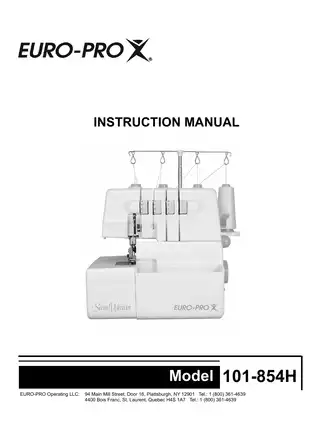
The Kinematics of Looper Synchronization and Differential Feed
Modern overlock machine systems rely on a complex interplay of mechanical linkages that must maintain constant timing while operating at speeds exceeding 1,300 stitches per minute. The precision interface between the upper and lower loopers is particularly critical, where internal clearances are measured in fractions of a millimeter.
A forensic look at Euro-Pro engineering reveals that maintaining “skip-free” seams requires exact needle-to-looper timing. The 534DX and 544D series utilize a sophisticated differential feed system that must be calibrated to manage fabric stretch or puckering. This involves validating the feed dog stroke against factory delivery curves to ensure stoichiometric efficiency in fabric transport.
Mechanical Calibration and Thermal Regulation of High-Speed Components
Overhauling the Euro-Pro series involves more than standard lubrication; it requires validating the mechanical integrity of the drive motor and the thermal regulation of the friction-bearing points.
Critical Technical Calibration Benchmarks:
- Needle Bar Height: Precise adjustment to ensure the looper point meets the needle scarf at the exact millisecond.
- Thread Tension Assembly: Calibration of the disc pressure to maintain stable operating friction across various thread viscosities.
- Cutter Blade Alignment: Strict adherence to the lateral blade pressure values to ensure a clean edge finish without material shredding.
For those aiming to scale their technical capabilities in domestic or light industrial repair, utilizing our Euro-Pro 1260DX Technical Archive or the Euro-Pro 1260 Master Service Data provides the specific factory data required for high-level equipment management.
Strategic Maintenance for Textile Equipment Portfolios
The service life of premium sewing equipment is extended only through a maintenance culture that rejects generic repair shortcuts. Our Advanced Overlock Operation Library serves as a centralized vault for technical workshop archives, allowing for cross-model data verification and the maintenance of rigorous engineering standards across various stitching platforms.
Conclusion: Sustaining Mechanical Sovereignty
The return on investment for the Euro-Pro 534DX and 544D is protected by the quality of its technical care. By bypassing unverified secondary information and relying on the official Technical Workshop Archive, you secure the mechanical longevity and operational safety of your machinery. True performance optimization is achieved only when the original engineering standards are treated as the absolute law of the workshop.
Technical Tags:
Euro-Pro 534DX, Euro-Pro 544D, Overlock Machine, Service Manual, Workshop Manual, Looper Timing, Differential Feed Calibration, Needle Bar Height, Technical Documentation, Factory Service Data, RepairLoader, Euro-Pro Repair, Textile Engineering, Tension Adjustment, Precision Stitching
Resource Library:
- Euro-Pro Industrial & Domestic Repository (2026)
- Power-Flow & Fluid Dynamics Library (Textile Division)
- Master Technical Service Archive