Audi Factory Service Manuals: Professional-Grade Repair Data
Audi engineering is built on precision—from TFSI engines and Quattro all-wheel drive to complex systems like MMI and S-Tronic transmissions. When you are working on a vehicle of this caliber, generic repair guides are not enough. To maintain the performance and safety of your A3, Q7, or R8, you need the same documentation used by dealership technicians.
OEM Accuracy for Complex Repairs
In the world of German automotive maintenance, accuracy is everything. Our library provides high-resolution digital replicas of the original factory workshop manuals. These are not summarized guides; they are the complete engineering archives from Audi AG, ensuring you have the exact wiring schematics and torque specifications required for professional-grade results.
- Authentic Factory Documentation: Direct access to original Audi AG workshop publications and dealer-level service information.
- Original Mechanical Specifications: Get the exact data for TFSI timing chains, Quattro differentials, and sensor calibrations—straight from the source.
- High-Resolution Schematics: Clear, zoomable PDFs featuring detailed electrical maps and CAN-bus routing for your diagnostic workstation.
Finding the Right Manual for Your Audi
Audi’s lineup is extensive, and specifications often change mid-generation. To ensure you have the correct data for your project, please verify your vehicle details:
- Identify Your Chassis Code: Confirm your platform (e.g., A4 B8 vs. B9) to ensure the diagnostic protocols and mechanical procedures match your specific car.
- Verify Engine and Drivetrain: We provide specific coverage for TFSI, TDI, and FSI variants across both Front-Wheel Drive and Quattro configurations.
- S-Line and RS Performance Models: Specialized data for high-performance models, including unique braking systems, cooling requirements, and suspension geometry.
Disclaimer: These service manuals are intended for use by qualified automotive professionals and experienced DIY mechanics. Attempting complex repairs without proper tools, safety equipment, or training can result in serious injury or permanent vehicle damage. Always follow standard shop safety protocols. RepairLoader is not responsible for any damage or injury resulting from the use of the technical data provided in these documents.
Audi Manuals (4 total results)
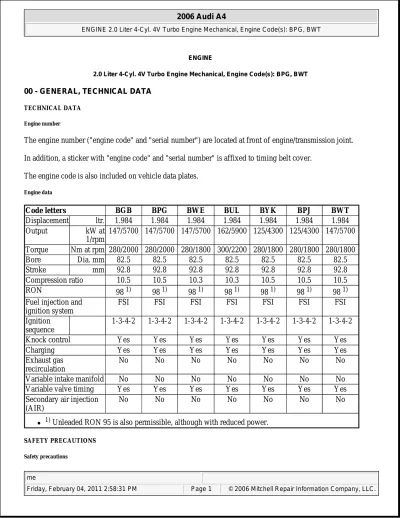
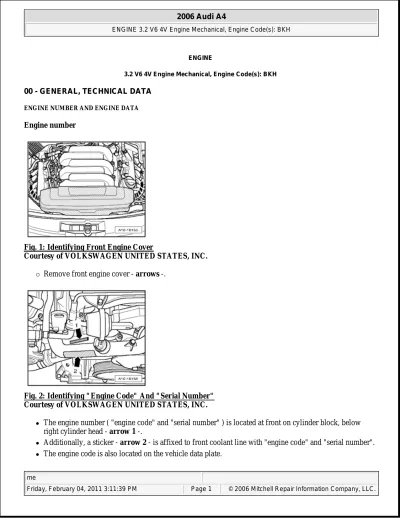
Audi A4 1.8T, 2.0T, 2.4, 2.7T, 3.2 2002-2008 Repair Manual OEM (P/N C4085-91017)
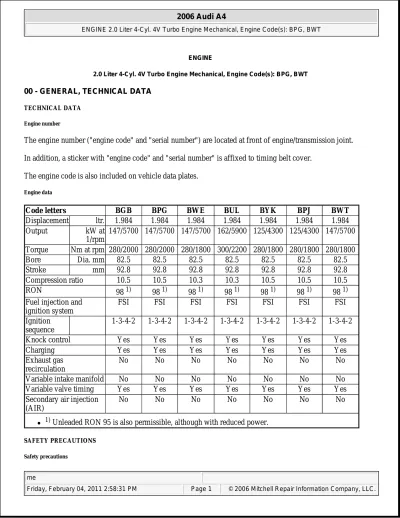
2003–2010 Audi A3 Service & Repair Manual (P/N C4077-90960)
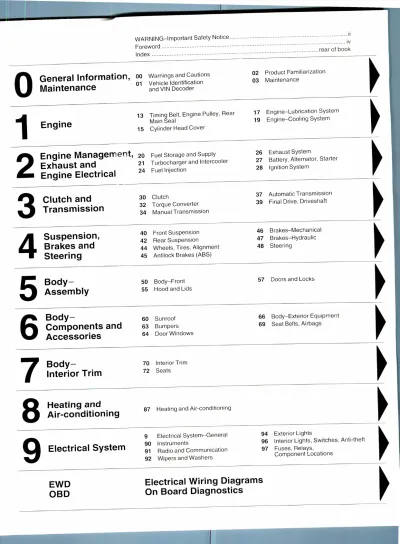
1998–2004 Audi A6, S6, allroad quattro, and RS6 OEM Service Manual