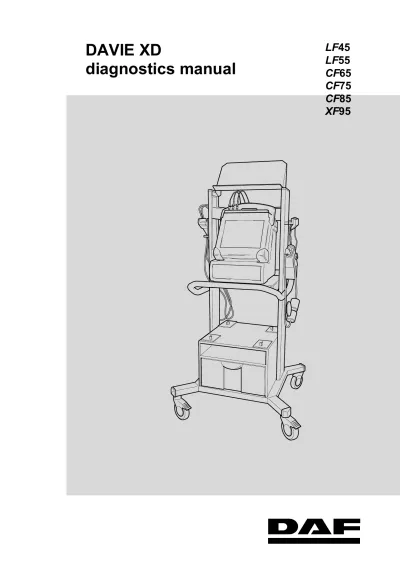
DAF Truck Service & Workshop Manuals – Genuine PACCAR Technical Data
Get instant access to high-resolution, OEM-grade service manuals for DAF heavy-duty vehicles, including the XF, CF, and LF series. Our digital library provides fleet technicians, shop mechanics, and owner-operators with authentic reproductions of the original PACCAR engineering data required for engine overhauls, advanced air system diagnostics, and emissions compliance.
PACCAR Engine Architecture and System Integrity
DAF trucks are powered by highly efficient PACCAR engines and sophisticated electronic networks. Maintaining a truck for long-haul operations requires exact manufacturer specifications to ensure maximum uptime and road safety. We provide direct digital copies of the master workshop documentation that go far beyond generic advice. Access critical data for:
- PACCAR MX & PX Engines: Full service protocols for MX-11, MX-13, and PX series engines. Access precise fuel injection timing, cylinder head torque sequences, and turbocharger boost specifications essential for peak performance and fuel efficiency.
- Transmission & Driveline: Detailed troubleshooting and rebuild sequences for ZF AS Tronic and TraXon automated gearboxes. Our manuals provide exact wear tolerances for clutch actuators and internal gear geometry derived from official assembly standards.
Advanced Technical Depth: Air Systems and Electronic Safety
Modern DAF trucks utilize complex networked systems for braking, suspension, and driver assistance. Our factory-level manuals provide the technical depth necessary to manage the specialized architecture of heavy-duty transport, ensuring every repair meets rigorous safety standards:
- ECAS & Air Systems: Professional-grade schematics for Electronically Controlled Air Suspension (ECAS) and air braking systems. Access precise pressure test points, valve calibrations, and compressor maintenance intervals.
- EBS, CAN-bus & Safety Electronics: Complete, color-coded wiring diagrams for troubleshooting Electronic Braking Systems (EBS), Central Vehicle Computing (VIC), and Adaptive Cruise Control (ACC) sensor arrays.
- Exhaust Aftertreatment: Specialized diagnostic data for AdBlue systems, including DPF regeneration protocols and NOx sensor calibration.
Professional Utility for Fleet Maintenance
Every DAF workshop manual is delivered as a fully searchable, high-fidelity PDF file, mirroring the layout and precision of the original technical releases. This eliminates the downtime associated with physical shipping and ensures your technicians have the most accurate data at their fingertips. Pull up intricate electrical circuit diagrams or exploded parts views directly on a ruggedized laptop or tablet in the service bay. By utilizing these authentic technical masters, you ensure that every maintenance interval strictly adheres to DAF’s original engineering standards.
Technical Document Integrity & Safety Notice: These manuals consist of digitized factory data to ensure the highest level of mechanical precision for your DAF fleet. Because heavy-duty truck maintenance involves safety-critical systems like steering and high-pressure air systems, we provide only high-resolution reproductions of official technical documentation. Always cross-reference diagnostic codes with live vehicle data to maintain operational safety and compliance with transport regulations.
DAF Manuals (2 total results)
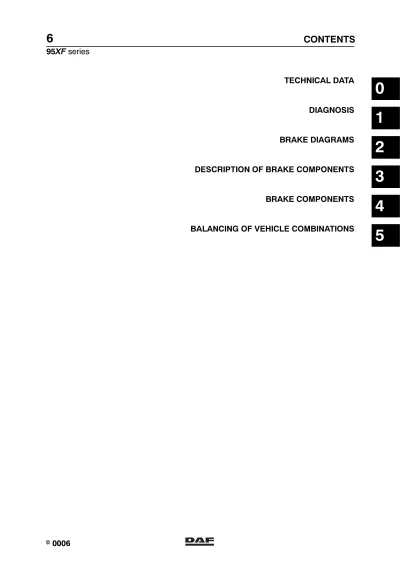
1997–2002 DAF 95XF Trucks (FT, FA, FTP, FTG, FTS, FTT, FAC, FAD) Service Manual (P/N DW03247106, DW23262905 DW23212303)