Finding the right backhoe loader manual is mostly about matching the listing details, not just the machine name on the decal. On the main John Deere backhoe loader manual page, shoppers should look for document wording, model-family cues, and visible coverage markers before deciding which PDF fits best. If you are browsing similar equipment categories, the broader backhoe loader manual section can also help narrow down the right format and machine group.
Because the uploaded manual is presented as a technical reference document, it works best as a listing-match aid rather than a general-purpose PDF for every John Deere machine with a similar name. That distinction matters when neighboring models, sub-series, or revised document sets appear close together in the catalog.
The details that usually matter most on the listing
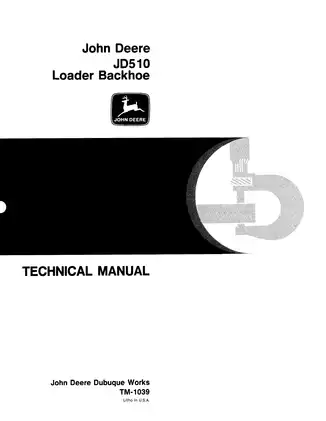
The strongest match points are usually the exact machine designation, any visible document number, and the manual type shown on the cover or listing. Those cues tend to be more reliable than a shortened title alone, especially when several related John Deere files appear side by side.
If the product page shows grouped model references, serial windows, series tags, or document IDs, those markers should be treated as the main coverage signals. Buyers comparing multiple listings should line up those identifiers first before focusing on format or page depth.
Why nearby John Deere listings may not mean the same coverage
Many buyers run into naming overlap when they browse manuals for loaders, tractor-loader-backhoes, or adjacent machine families. Similar titles can still point to a different model revision, a different document bundle, or a separate manual category.
That is why related pages should be compared by description rather than by brand name alone. For example, a John Deere manual archive page with additional model listings, a related John Deere manual PDF for another machine group, an alternative John Deere technical manual listing, or a different John Deere manual package in the same catalog area may look close in the catalog while still covering different equipment families.
What the document type usually tells you
A workshop or service-style manual is usually aimed at reference depth across assemblies, technical pages, diagrams, and grouped internal sections. A parts catalog is more centered on exploded views and item references. An operator manual generally stays closer to controls, routine machine use, and overview material.
For shoppers, that difference is important because the right choice depends on the kind of reference material they want to keep on hand. The manual category on the listing often says a lot about what the file contains before you even open it.
Coverage edges are worth checking closely
Even when a listing looks close to your machine, that does not always mean every regional version, attachment variation, or naming revision is inside the same package. John Deere listings often sit near each other with overlapping terminology, so the coverage line can come down to one series tag, one serial break, or one document reference.
That is why a careful buyer usually checks for consistency across the title, the visible identifiers, and the internal wording on the page. When those three points agree, the match is usually much clearer.
What you may see inside
Cover page with machine or series identifiers
Manual category naming
Section-based contents pages
Technical data references
Diagrams or schematic pages
Grouped chapter structure
Internal document numbering
Multi-page PDF layout
| Reference label | Visible listing cue |
|---|---|
| Coverage marker | Model or series designation |
| Document type | Workshop, service, parts, or operator |
| File format | |
| Series tag | As shown on the product page |
| Document ID | If listed on cover or in description |
A manual listing becomes easier to trust when the model wording, document type, and coverage markers all point in the same direction. Before choosing a file, compare the visible identifiers on the page with your own machine details so the PDF you select fits the equipment family you actually have.