Bomag Construction & Compaction Equipment Service Manuals
Keeping Bomag machinery running requires technical precision to ensure both job-site safety and equipment longevity. As a leader in compaction technology, Bomag systems—including hydrostatic drives and advanced hydraulic circuits—demand specific maintenance protocols. Whether you are servicing a heavy soil compactor, an asphalt roller, or a vibratory tamper, generic equipment guides aren't enough. Accessing model-specific factory documentation is the only way to maintain the high performance standards expected of the Bomag brand.
Factory-Spec Repair Data & Technical Reliability
In the field of heavy compaction repair, the accuracy of your technical source material determines the speed of the repair and the safety of the machine. To meet professional standards for technical reliability, our Bomag library consists of high-resolution digital replicas of official manufacturer documents. These archives are 1:1 mirrors of the original engineering data, preserving the exact wiring schematics, sensor calibration parameters, and torque sequences established by the original Bomag R&D departments in Boppard, Germany.
OEM-Standard Archives for Fleet Maintenance
In the construction industry, equipment downtime leads directly to project delays. Guessing hydraulic pressure settings or using unverified data on a vibratory plate can result in component failure or unsafe operating conditions. To ensure your fleet meets factory standards, our repository is built exclusively on verified workshop literature:
- Factory Service Documentation: We provide high-resolution, unedited digital archives of original Bomag workshop manuals, Technical Service Bulletins (TSB), and official dealership publications. This is the same data used by factory-trained technicians.
- Precision Engineering Specs: Every critical metric—from hydraulic flow rates and vibration frequencies to engine torque sequences for Deutz, Cummins, or Hatz powerplants—is pulled directly from the manufacturer’s master reference files.
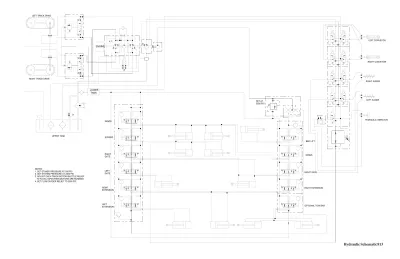
- Field-Ready Diagnostic Clarity: Every PDF is inspected for legibility. Complex hydraulic schematics, electrical wiring harnesses, and exploded assembly views are crystal clear and usable on tablets or laptops directly in the shop or on-site.
How to Identify the Correct Bomag Manual
Bomag equipment is categorized by specific application types and generation codes. To ensure you download the correct technical literature, please verify the following details on your machine’s data plate before selection:
- Check the Equipment Class: Bomag documentation is split by machine type. A manual for a light compaction tool (like a BT rammer or BVP vibratory plate) covers a completely different mechanical architecture than a heavy single-drum roller (BW series) or a cold planer (BM series).
- Match the Serial Number Range: Bomag frequently updates hydraulic pumps, valves, and electronic modules (ECMs) within the same model family. Always ensure the manual title corresponds to your machine’s specific serial number to guarantee parts and schematic compatibility.
- Verify Specialized Systems: Many Bomag rollers feature specialized technology like Variocontrol or Economizer. Ensure your chosen manual explicitly covers the specific engine and vibration system (Exciter) installed on your unit.
Selecting the Right Documentation for Your Task
Ensure the guide you choose matches the technical depth of your repair:
- Service & Workshop Manuals: The definitive references for deep mechanical repair, covering hydrostatic transmission overhauls, vibration system calibration, and advanced hydraulic troubleshooting.
- Operating & Maintenance Instructions: Focused on daily safety checks, lubrication points, fluid capacities, and routine service intervals.
- Illustrated Parts Catalogs: Vital for identifying exact OEM part numbers through exploded assembly diagrams—essential for sourcing correct replacement seals, bearings, and wear parts.
Technical Disclaimer: Repairing heavy construction and compaction equipment involves inherent risks. These service manuals are intended for use by trained professionals and technicians. Always follow OSHA safety guidelines and manufacturer-specific safety protocols. RepairLoader is an independent provider of technical literature and is not an authorized partner of Bomag GmbH unless otherwise stated.
Bomag Manuals (3 total results)
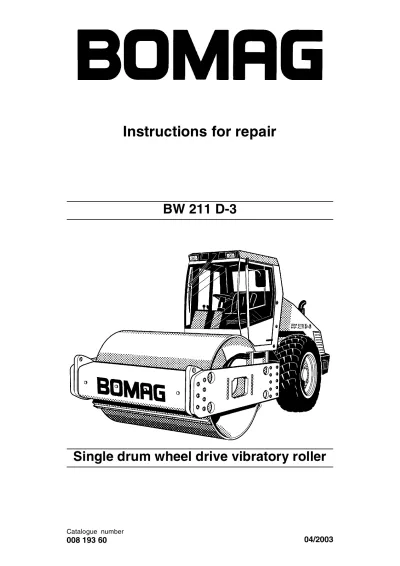
2003 BOMAG BW 211 D-3 Repair Manual (P/N 008 193 60)
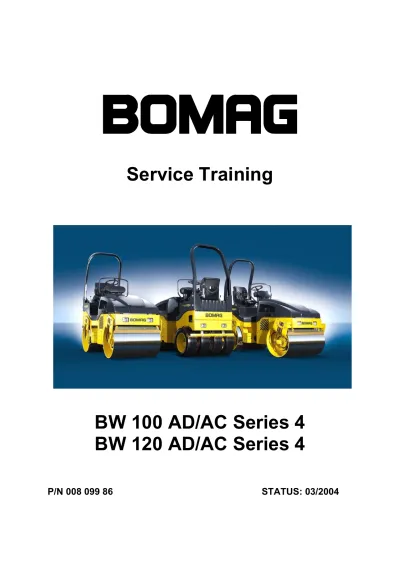
2004 BOMAG BW 100/120 AD/AC Series 4 Roller Service Training & Legacy Wiring Diagram Manual Set (P/N 008 099 86)