Honda XL600V Transalp, XL650V Transalp and XRV750 Africa Twin dual-sport motorcycles Haynes Service & Repair Manual, 1987-2002
Manual Preview
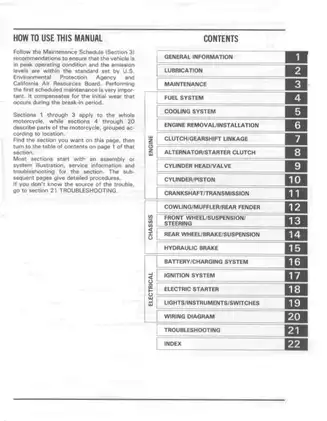
Sample pages from the Honda XL600V Transalp, XL650V Transalp and XRV750 Africa Twin dual-sport motorcycles Haynes Service & Repair Manual, 1987-2002 manual
Purchase & Download
Honda Models Covered & Key Technical Specifications
- Honda XL650 Transalp / XRV750 Africa Twin (XL600V/XL650V/XRV750) — [1987–2002]
Official Repository | XL600V-H, J, K, L, M, N, P, R, S, T, V, W, X / XL650V-Y, 1, 2 / XRV750-L, M, N, P, R, S, T, V, W, X, Y, 1, 2 Dual-Sport Portfolio (Vault)
-
Technical Displacement: 583cc / 647cc / 742cc defines the engine configuration for the V-Twin assembly.
-
Specific Spark-Plug-Gap: 0.8–0.9 mm is required for optimal combustion across the Transalp and Africa Twin ignition cycles.
-
Essential Oil-Volume: 2.4–2.6 Liters must be maintained during filter changes to ensure consistent lubrication.
-
Advanced Valve-Clearance: IN: 0.15 mm / EX: 0.20 mm establishes the precise timing required for the SOHC valvetrain.
-
Core Tire-Pressure: 2.0 bar / 2.25 bar signifies the load-bearing standard for off-road and touring operations.
Honda Manual Features & Content Preview
Integrated Technical Manual Reference: Honda XL650 Transalp / XRV750 Africa Twin Series
Honda XL650 Transalp / XRV750 Africa Twin (XL600V/XL650V/XRV750) — [1987–2002]
Technical-Repository
Strategic Methodology
To ensure system alignment across the multi-generational V-twin platforms, this documentation serves as a centralized reference point for designated service professionals. Within the component context, the manual structures essential maintenance logic spanning the legacy XL600V iterations through the evolved Africa Twin architecture. Governing operational sequences, the technical framework prioritizes long-term mechanical integrity by outlining the relationship between specific subsystem assemblies and their intended operational environment.
Precise Parameters
Adhering to OEM-defined parameters, the repository categorizes vital drivetrain and electrical schematics to facilitate rigorous system analysis. Rigorously validating system logic remains a prerequisite for any diagnostic intervention involving the intricate wiring or fueling systems described in the technical text. To maintain structural performance, the document mandates that all adjustments align precisely with the manufacturer's original standards as established during the production year of each specific model variant.
Advanced Protocol
Establishing the baseline for system reliability, the documentation bridges the gap between different engine displacements and chassis configurations. Fuel delivery calibration necessitates adherence to the specific carburetor or ignition curves detailed in the primary factory source material. Beyond the basic mechanical overview, the architecture provides a logical path for understanding the evolution of the cooling and suspension systems throughout the decade-long production cycle of these dual-sport platforms.
| System Grouping | Component Categories | Document Scope Areas |
|---|---|---|
| Powertrain Integrity | Crankcase, Valvetrain, Gearbox | Primary Mechanical Architecture |
| Electrical Framework | Ignition, Charging, Loom Routing | Logic-Path Diagnostics |
| Chassis & Control | Suspension, Braking, Frame | Structural Safety Standards |
| Auxiliary Systems | Cooling, Filtration, Exhaust | Operational Threshold Maintenance |
Manual FAQ, Purchase & Download Details
Customer Reviews
Read what our customers say about this Honda Bike manual and share your own experience.