1975-1977 Yamaha XS250, XS360, XS400 Twins Workshop Manual
For XS250, XS360, & XS400 Twins: diagnostics, service, and parts for these classic motorcycles. Ref: C8049A
Manual Preview
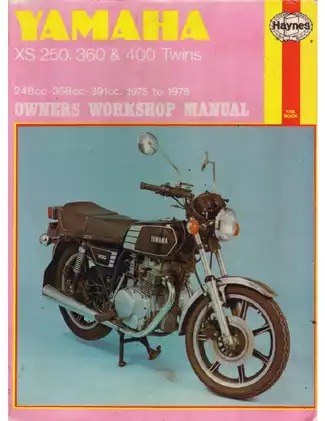
Sample pages from the 1975-1977 Yamaha XS250, XS360, XS400 Twins Workshop Manual manual
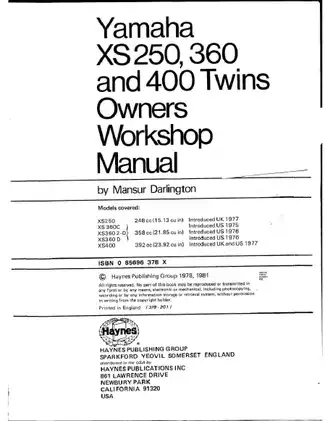
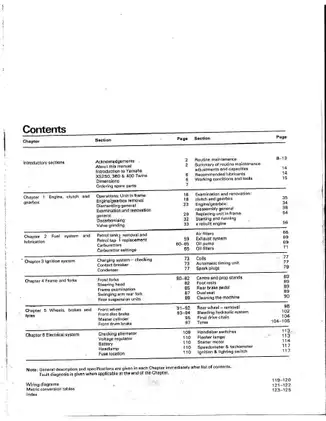
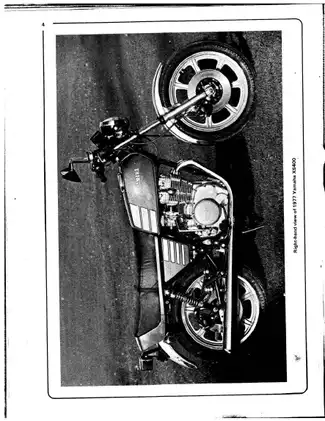
Purchase & Download
Yamaha Models Covered & Key Technical Specifications
Models: Yamaha XS250, Yamaha XS360, Yamaha XS400
Sub-models / Variants: XS360C, XS360-2D, XS400
Build Years: 1975–1978
Technical Data:
- Engine displacement: 248 cc (XS250), 358 cc (XS360), 392 cc (XS400)
- Engine type: Vertical parallel twin, 180-degree crankshaft, 4-stroke, overhead camshaft
- Fuel system: Dual Mikuni constant velocity carburetors (BS32 or BS34)
- Lubrication system: Wet sump with trochoid oil pump
- Transmission: 6-speed constant mesh
- Ignition timing: 10 degrees BTDC (retarded), 36 degrees BTDC (advanced)
- Valve clearance (cold): 0.08–0.12 mm intake, 0.16–0.20 mm exhaust
Yamaha Manual Features & Content Preview
1975–1978 Yamaha XS250, XS360, and XS400 Workshop Manual
- Covers 1975–1978 Yamaha XS250, XS360, and XS400 twins, including variants such as the XS360C and XS360-2D
- Original Haynes publication P/N 0 85696 378 X, printed in England
- Features 124 pages of technical documentation including 14 detailed engine and chassis exploded-view diagrams
- File delivered as a direct download the moment payment clears
- Indexed PDF search covers every chapter and appendix
- Stored against your account so you can retrieve it after a hard-drive loss
- Suitable for printing individual sections for shop-floor use
- This 1978/1981 publication is the definitive reference for the first-generation Yamaha twin-cylinder platform documentation
Mechanical Scope and Systems
This Yamaha XS250, XS360, and XS400 workshop manual provides deep technical documentation for the maintenance and renovation of the Yamaha four-stroke twin-cylinder line. The document covers the engine and gearbox assembly, including how factory workshop documentation is structured for the 248 cc, 358 cc, and 392 cc variants. Chapters transition from routine maintenance and lubrication to fuel system tuning of the Mikuni constant velocity carburetors, ignition timing, and the electrical system. The manual details frame and fork inspection, front and rear wheel service, and braking system renovation for both disc and drum brake configurations.
Engine and Chassis Specifications
Engine component tolerances are listed in the engine chapter, detailing bore, stroke, and compression ratios for each model. The manual also includes specific fastener torque settings for cylinder head assembly and crankcase bolts. Intake valve clearance is listed at 0.08–0.12 mm in the cylinder head specification table. The front fork damping fluid capacity is documented at 130 cc. The Suzuki QuadRunner LT300E-era ignition coils for these machines are specified at 4.0 ohms primary and 9.5K ohms secondary resistance. This 124-page Haynes manual serves as the primary technical reference for the maintenance and repair of the 1975–1978 Yamaha XS series twins, covering engine, chassis, fuel, and electrical system specifications.
Document Reference: Haynes Publishing Group, ISBN 0 85696 378 X, 1978/1981 edition
Manual FAQ, Purchase & Download Details
Customer Reviews
Read what our customers say about this Yamaha Motorcycle manual and share your own experience.