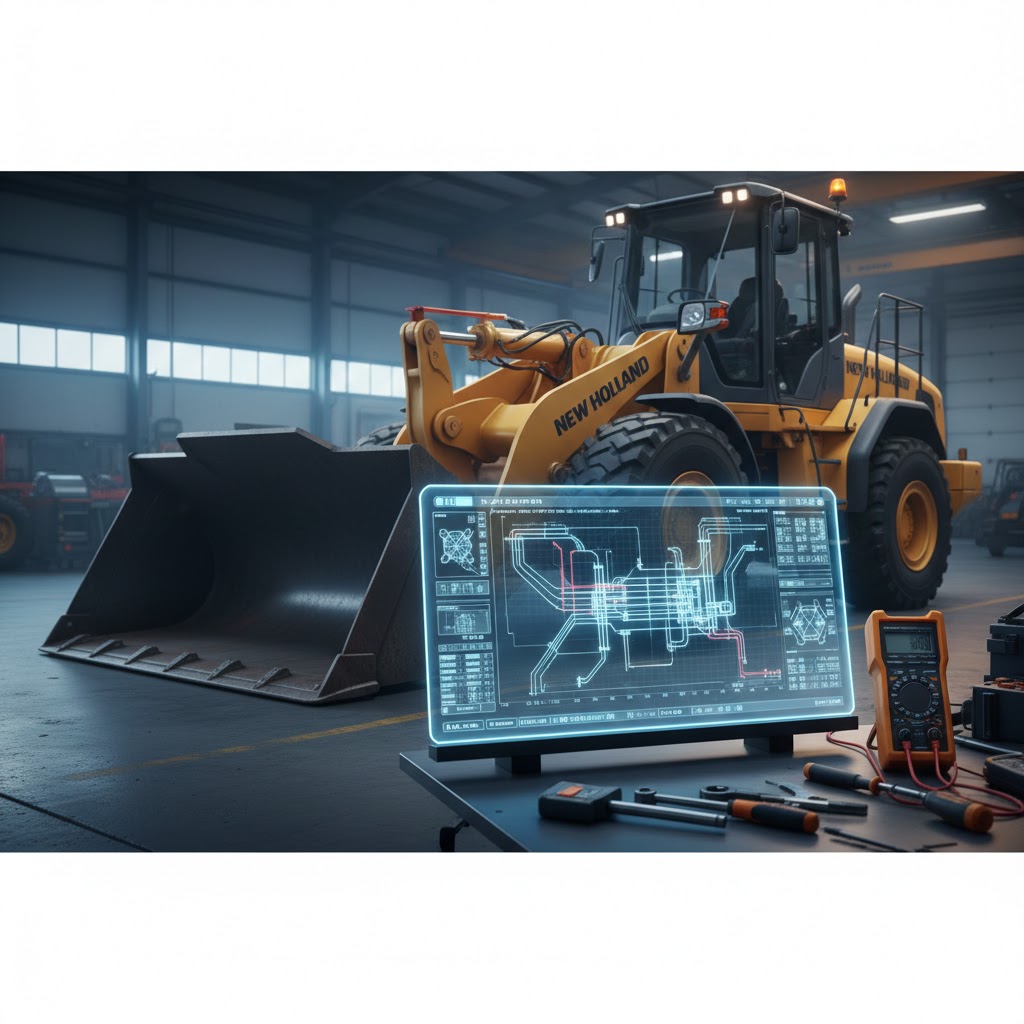
In high-output material handling, the operational dominance of the New Holland LW110 and LW130 series is predicated on the precise calibration of its integrated systems. Maintaining these wheel loaders requires a shift from general mechanical oversight to a deep-level technical strategy. To preserve breakout force and transmission efficiency, technicians must leverage verified Factory Service Data to navigate the complex interplay between hydraulic signal pressure and mechanical clamping forces.
The Architecture of Load-Sensing Systems
The New Holland LW110/130 series utilizes a sophisticated hydraulic ecosystem designed for simultaneous steering and loading functions. Precision in this area is non-negotiable, as even minor pressure variances can lead to parasitic power loss or sluggish cycle times.
- Hydraulic Flow Mapping: The Master Service Data provides critical schematics for the main control valve and pilot pressure regulating valves. Understanding the internal orifice logic is essential for diagnosing “drift” in lift cylinders or erratic steering response.
- Pressure Management: Accessing the exact factory settings for crossover relief valves and counterbalance valves ensures the system operates within its engineered safety margins, preventing component fatigue during peak loading cycles.
Structural Torque and Safety Engineering
The structural integrity of a wheel loader is often determined by the precision of its heavy-duty fasteners. The LW110 and LW130 rely on specific torque sequences to maintain the stability of the ROPS (Roll-Over Protective Structure) and the articulation joint.
| Critical Assembly | Component / Fastener | Specification (Factory Benchmarks) |
|---|---|---|
| Cab Mounting | Nut M16 (Cab Retaining) | 21 daNm (210 Nm) |
| ROPS Frame (Rear) | Retaining Bolt M30 | Verified Factory Sequence Required |
| ROPS Frame (Front) | Retaining Bolt M24 | Verified Factory Sequence Required |
| Braking System | Brake Release Valve | Specific 43-4360-14 Disassembly Logic |
The manual dictates that when the machine is partially or fully raised for servicing, mechanical support must replace hydraulic lift cylinders to prevent catastrophic failure. Utilizing the New Holland LW110 & LW130 Technical Workshop Archive is the only way to ensure these safety-critical assembly procedures are followed to the letter.
Powertrain and Diagnostic Calibration
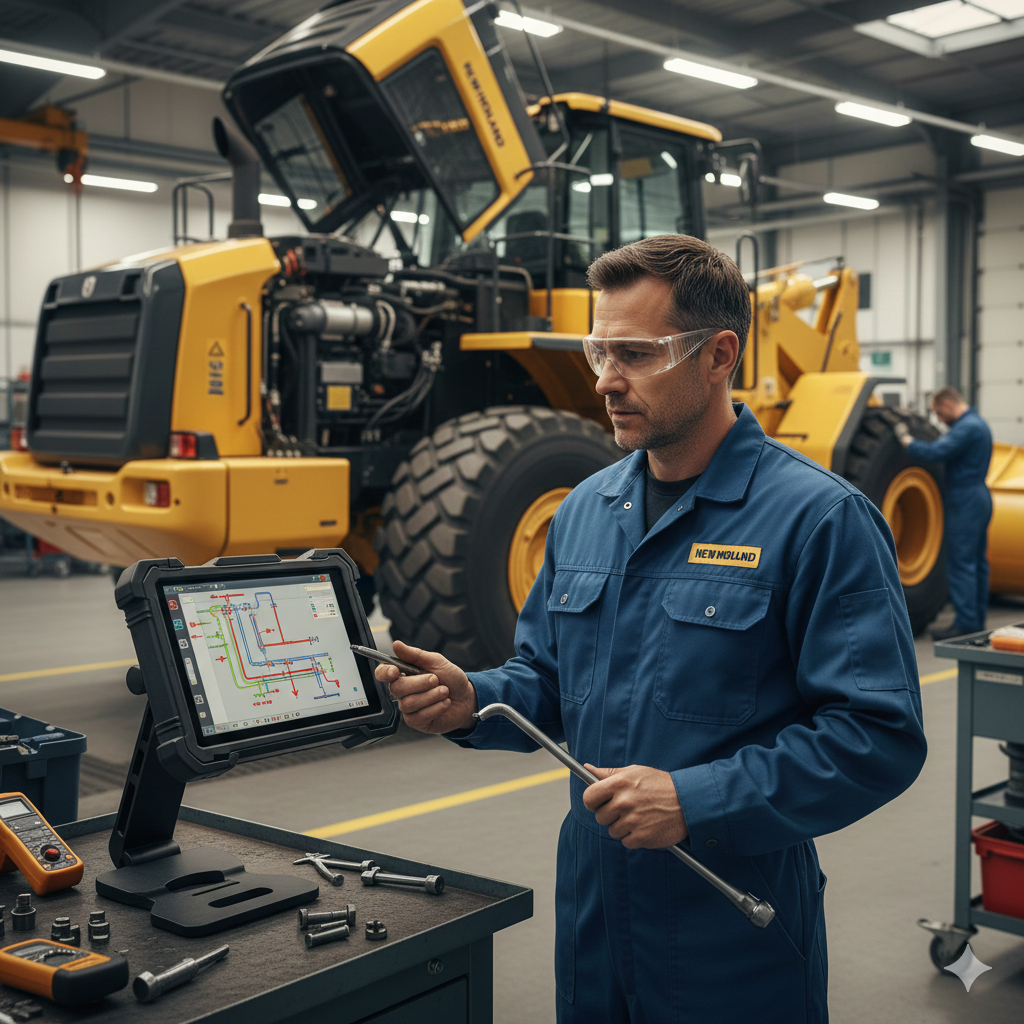
Beyond the chassis, the powertrain requires rigorous synchronization. The technical documentation provides the blueprint for disassembling and reassembling the swing motors and propel motor counterbalance valves—components that are vital for the loader’s maneuvering precision.
- Transmission Integrity: Detailed repair protocols for the drive gearbox ensure that power transfer remains efficient, reducing heat buildup and extending the life of the friction plates.
- Electrical System Interfacing: Wiring schematics allow for the isolation of electrical cables before cab removal, preventing short circuits in the monitoring systems.
Professional Fleet Integration
For organizations managing specialized loading fleets, consolidating high-authority data is a prerequisite for ROI. To support a broader range of machinery, we provide access to these technical gateways:
- Explore our comprehensive Wheel Loader Service Manual Library.
- Access the full New Holland Factory Service Data portal.
Conclusion: Data-Driven Equipment Longevity
A New Holland wheel loader is an investment in industrial productivity. To maintain the engineering dominance intended by the manufacturer, the application of original Technical Manual Specifications is the only viable path. Rely on the RepairLoader repository to provide the surgical depth required to conquer the most demanding job sites.