2x4 & 2WD Service Manuals: Original OEM Repair Guides for ATVs & UTVs
Searching for a manual using just "2x4" or "2WD" can be tricky. While the 2x4 designation simply means power is sent to two wheels, it covers a massive range of equipment—from sport quads to heavy-duty farm UTVs. The drivetrain on a 2-wheel-drive Yamaha Bruin 350 is a different beast compared to the rigid-axle setup on a Suzuki Ozark 250 or a Polaris Trail Boss.
At RepairLoader, we provide the original factory manuals you need to get your machine back on the trail or back to work without the guesswork.
Why Use Original OEM Service Manuals?
When you’re rebuilding a continuously variable transmission (CVT) or adjusting valve clearances, generic aftermarket guides often miss the mark. To do the job right, you need the exact specs the factory engineers used. Our library is built on authentic manufacturer data to ensure you have the right info at your fingertips:
- Official Factory Manuals: We provide high-quality digital scans of the original manuals from brands like Suzuki, Yamaha, Polaris, and Kawasaki.
- Exact Mechanical Specs: Get the precise engine torque values, fluid capacities, and high-contrast wiring diagrams you won't find in a basic "how-to" guide.
- Clear & Readable Diagrams: Every PDF is checked to make sure exploded parts views and troubleshooting flowcharts are sharp and easy to read on your tablet or at your workbench.
How to Find the Right Manual for Your 2WD Machine
To make sure you download the correct guide, treat the "2x4" label as just one part of the puzzle. Always check your vehicle’s ID plate or VIN before you buy:
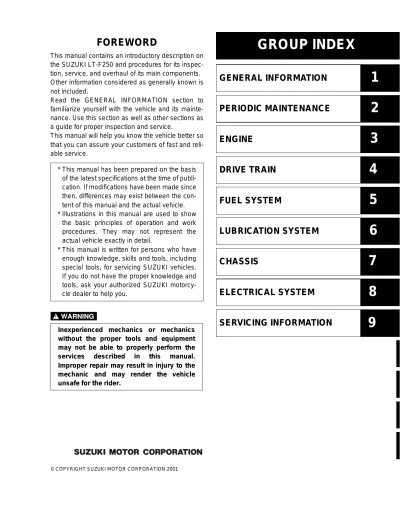
- Identify Your Category: A utility side-by-side (UTV) requires a completely different diagnostic approach than a sport ATV like the Suzuki LT-F250 Ozark.
- Confirm the Model Family: Many manufacturers offer the same model in both 2x4 and 4x4 versions. Some manuals, like the Suzuki Eiger LT-F400/400F series, cover both configurations in one book, while others use separate documents.
- Match the Production Year: Parts and wiring often change between model years. Always ensure your specific year is covered in the manual’s description to avoid ordering the wrong version.
Choosing the Right Type of Manual
Make sure you’re getting the level of detail your project requires:
- Service & Workshop Manuals: These are for the heavy lifting—engine teardowns, transmission rebuilds, and electrical diagnostics.
- Owner’s & Operator’s Manuals: These cover routine maintenance like oil changes, cable adjustments, and basic safety.
Find your brand and model below to get instant access to your factory-direct workshop records.
2x4 Manuals (3 total results)
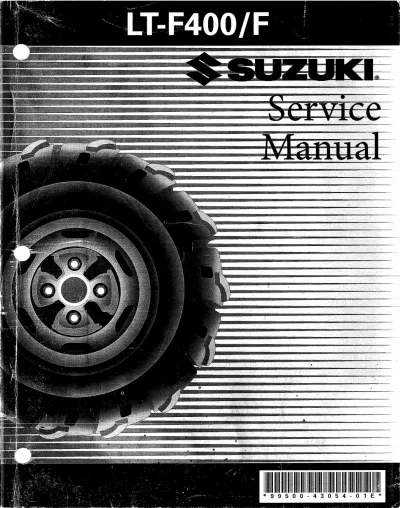
2002–2007 Suzuki Eiger 400, LT-F400/400F Factory Service Manual (P/N 99500-43054-01E)
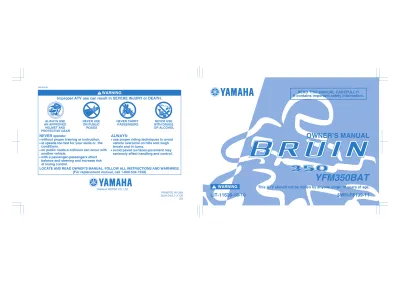
2004–2006 Yamaha Bruin 350 (YFM350BAT) 4x2 Owner's Manual (P/N LIT-11626-18-10)