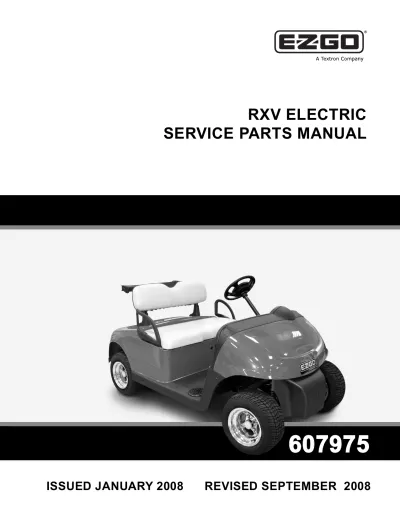
Golf Cart Service Manuals & Repair Guides – Original Factory PDFs
Keeping your golf cart running smooth—whether it’s for the back nine or a commercial job site—requires the right technical specs. Since many models come in both gas and electric versions, having the exact manual for your specific powertrain is the only way to ensure a safe, reliable repair. Using a 36-volt E-Z-GO schematic when you’re actually wrenching on a gas-powered Yamaha G-Series will only lead to frustration and blown parts.
Workshop Safety & Tech Info
Working on golf carts involves high-voltage battery banks (36V/48V), fuel systems, and heavy mechanical assemblies. We provide original factory manuals to help you do the job right. Always use insulated tools for electrical work, follow factory torque specs, and consult a professional for critical steering or braking system repairs.
Genuine OEM Manuals & Precise Specifications
Modern golf carts are more complex than they look, featuring specialized battery management systems (BMS) and proprietary CVTs. Guessing at wiring or torque values can quickly lead to fried controllers or drivetrain failure. Our library is built on verified engineering data to keep your cart on the path:
- Official Factory Reprints: We provide high-resolution, unedited digital copies sourced from original manufacturer publications.
- Exact Technical Specs: Get the real numbers for everything from valve clearances on gas engines to diagnostic steps for MCOR sensors and electronic controllers. Covers top brands like Club Car, Yamaha, E-Z-GO, and Harley-Davidson.
- Sharp, Zoomable Diagrams: Every PDF is checked for clarity. You can easily read complex wiring harnesses, solenoid schematics, and exploded parts views right on your tablet at the workbench.
How to Find the Right Manual
In the world of golf carts, a brand name isn't enough. Before you download, check your cart’s serial plate for these key details:
- Powertrain (Gas vs. Electric): This is the most important distinction. A 4-cycle gas engine requires completely different maintenance than a 48V electric system, even if the body style looks identical.
- Model Generation: Pay close attention to the series. For example, an E-Z-GO RXV uses an AC drive system that is totally different from the DC-powered TXT series. The same applies to Club Car Precedent vs. the classic DS models.
- Component Brands: Some carts use specific factory-installed parts from brands like Kawasaki (engines) or Curtis and Alltrax (controllers). Make sure your manual matches your specific setup.
Shop-Ready Digital Downloads
Our manuals are delivered as searchable, high-resolution PDFs. This means you can instantly pull up a wiring diagram or fluid chart while standing next to the vehicle. By using original factory documentation, you’re ensuring your maintenance meets the same standards the engineers intended.
Find your specific chassis and model year below for instant access to official OEM technical data.
Golf Cart Manuals (11 total results)
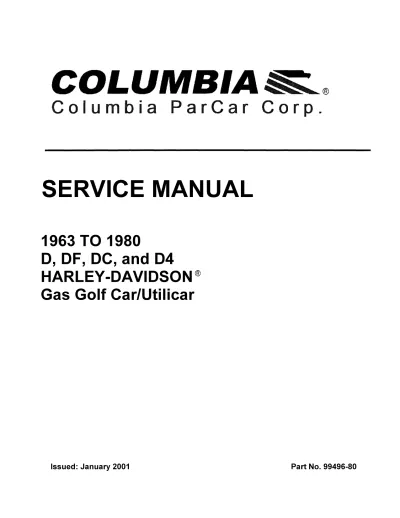
Harley-Davidson Golf Cart D, DF, DC, MGIV, DE4 Service Manual, 1963–1980 (P/N 99496-80)
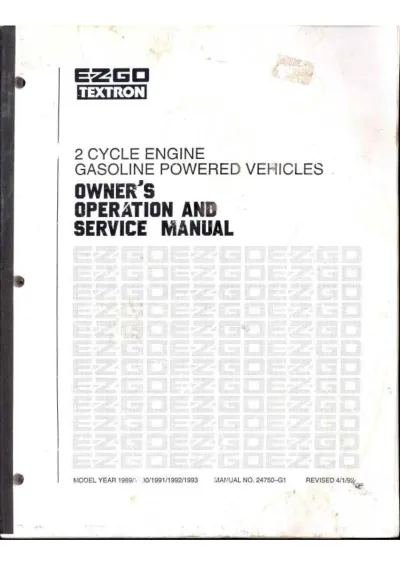
1989–1993 E-Z-GO Golf Cars GX-444F, GX-444J, GXI-300/800, GXT-300/800 Service Manual (P/N 24750-G1)
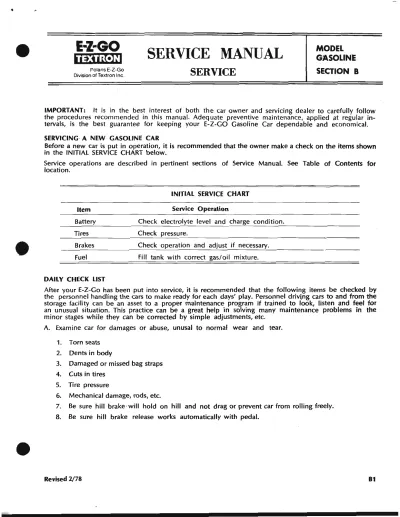
1970–1990 E-Z-GO GX440 / GX444 Gasoline Golf Cart Service Manual
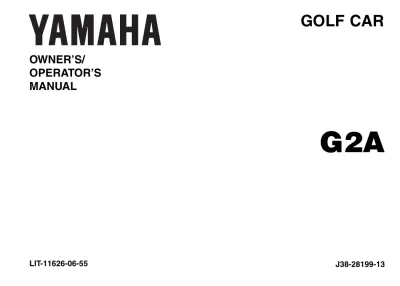
1988 Yamaha G2-A, G2-E & G9 Golf Cart Service, Owner's & Parts Manual Set (P/N LIT-11626-06-55, LIT-11626-06-56)
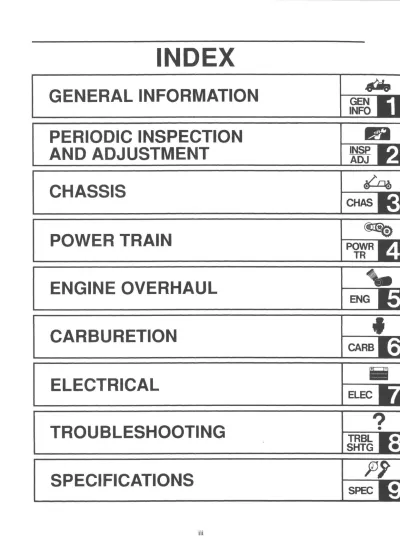
1996–2002 Yamaha Golf Cart G11 A / G14 A/E / G16 A/E / G19 E / G20 A Service Manual (P/N LIT-19616-00-00)
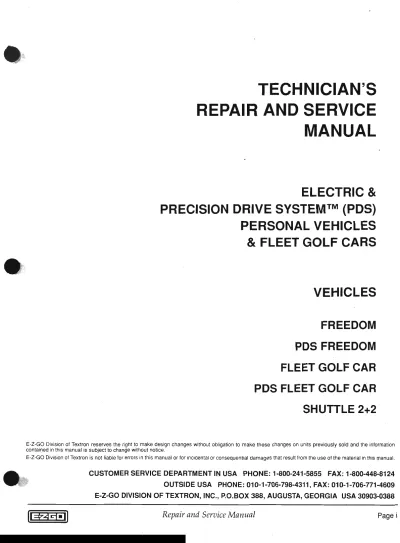
2001–2008 E-Z-GO Fleet Freedom & PDS Golf Car Service Manual (P/N 4C8281972000)
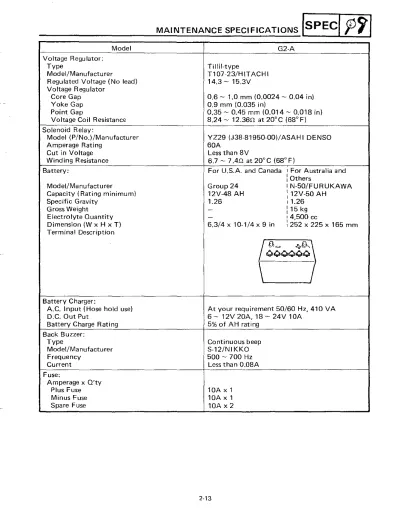
1996–2007 Yamaha G2 & G9 Golf Car Manual Collection (P/N LIT-19616-G9-93)
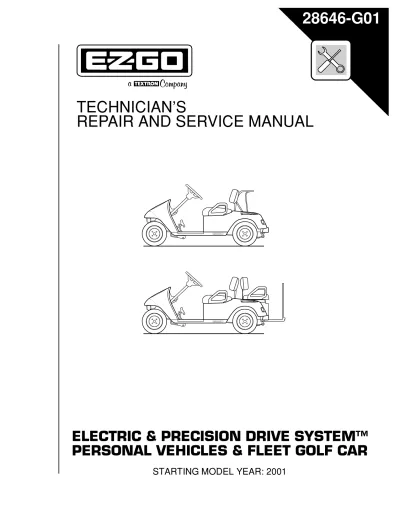
2001-Up E-Z-GO TXT Electric & PDS Golf Car Technician's Repair and Service Manual (P/N 28646-G01)
Yamaha Golf Car G9-AJ/EJ, G9-AG/AH, G9-EG/EH1, G9-EH Repair Manual (P/N LIT-19616-G9-93, LIT-19616-00-43)
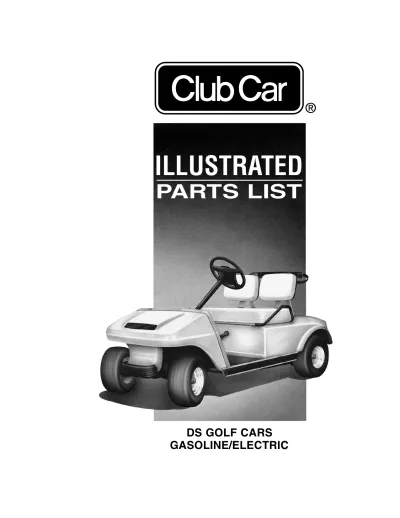
1984–2002 Club Car DS Gasoline & Electric Parts Manual (P/N 1018893-02)